
Where Winds Meet can make a new character feel underprepared and over-informed at the same time. Weapons, sects, Inner Ways, Martial Arts, Mystic Arts, gear, exploration, and side activities all arrive quickly. The first ten hours are easier when you focus on the few choices that shape the rest of your progress.
Your First 10 Hours at a Glance
You do not need a perfect build in your opening hours. Learn the combat rhythm, try a Weapon Path that feels right, progress through the systems the story introduces, and avoid dividing your upgrade materials between several builds.
| When | Focus on this | Leave this for later |
|---|---|---|
| Hours 0 to 1 | Tutorials, movement, blocking, deflecting, and starter weapons | Damage rankings and perfect gear |
| Hours 1 to 3 | Main story and the systems it unlocks | Farming a specific endgame set |
| Hours 3 to 6 | Exploration on your route, Oddities, and Path practice | Upgrading every weapon you find |
| Hours 6 to 10 | One preferred Path and its supporting upgrades | A second full build and detailed gear tuning |
Treat this as a route, not a checklist. The game is built around exploration as well as combat, and you can approach its activities in your own order. If a side story, puzzle, or local activity catches your attention, follow it.
Start With a Weapon Path, Not a Best Weapon
The most useful early choice is not a single weapon. It is a Weapon Path: a pairing and playstyle you want to learn before you begin concentrating your upgrades. Weapons work alongside Martial Arts, Inner Ways, and Mystic Arts, so an exciting weapon on its own is not the whole build.
- Balanced close-range player: start with the Path the game gives you and use it to learn defence, positioning, and weapon switching.
- Player who likes space and safety: try a ranged-oriented option when it becomes available. Fans and umbrellas suit a more ranged or supportive approach.
- Player who wants fast pressure: test a quicker melee style before investing, but do not expect speed to replace learning boss timings.
- Player who enjoys helping a group: keep a support or healing-oriented option in mind for later co-op instead of forcing it onto a solo build that does not feel good.
Weapon choice and sect membership are not the same lock. A sect may have its own rewards, rules, and progression, so choose one for the experience you want, not because you think it is the only way to use a weapon.
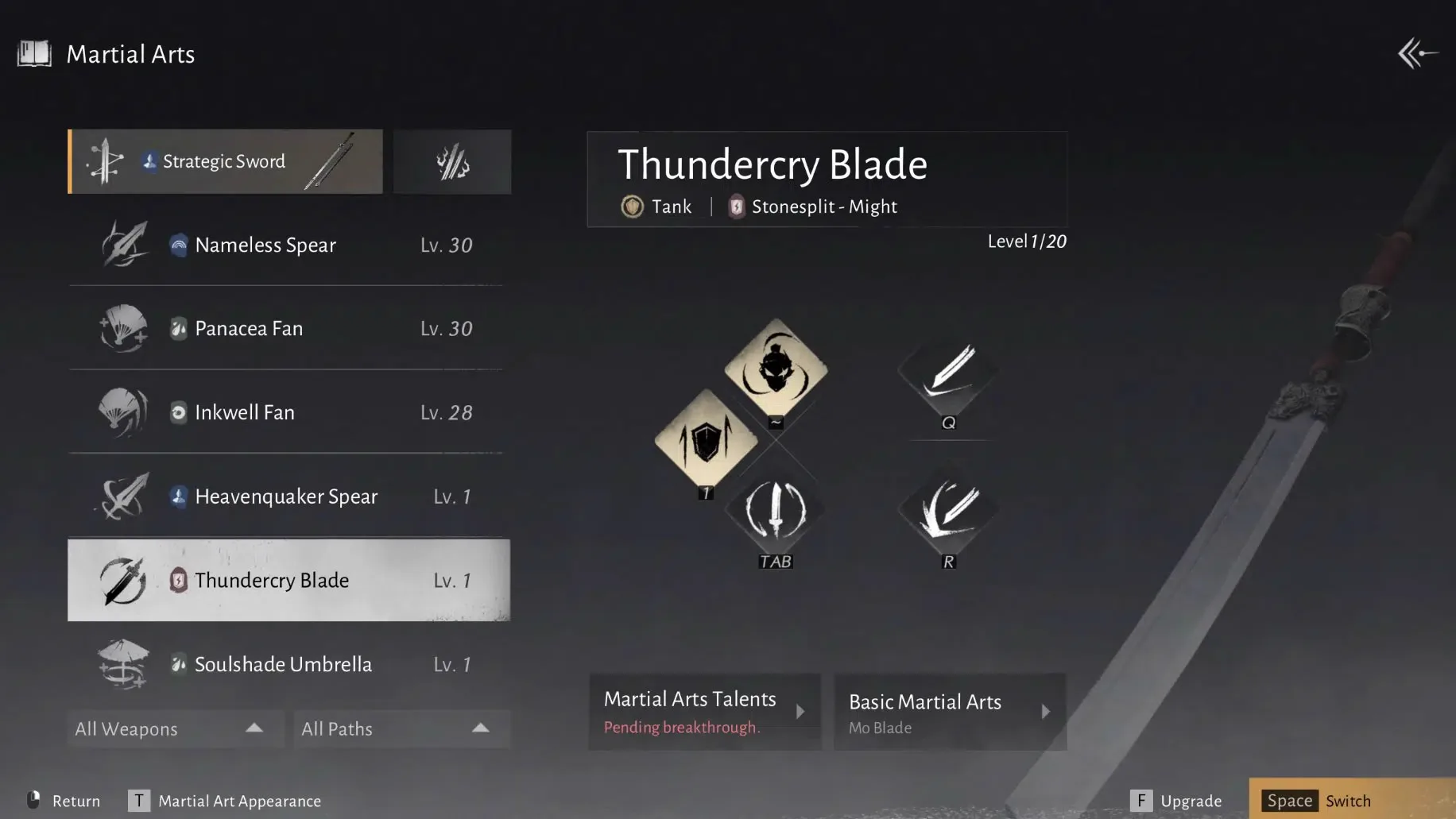
Learn the Combat Loop Before Chasing Damage
Watch before you attack. Take a few exchanges to see which attacks you can avoid, block, or deflect. Do not turn every encounter into a race to empty your stamina or health bar first.
Use the right tool for the situation. A close-range weapon may feel excellent against a single opponent and uncomfortable when enemies pressure you from several directions. Switching weapons and using Mystic Arts are part of the game’s combat vocabulary, not a sign that you picked the wrong main weapon.
Keep your first goals small. Learn one reliable opener, one defensive response, and one way to create space. A complex endgame rotation is not useful if you do not yet recognise the attack that should interrupt it.
Smart Progression: What to Upgrade First
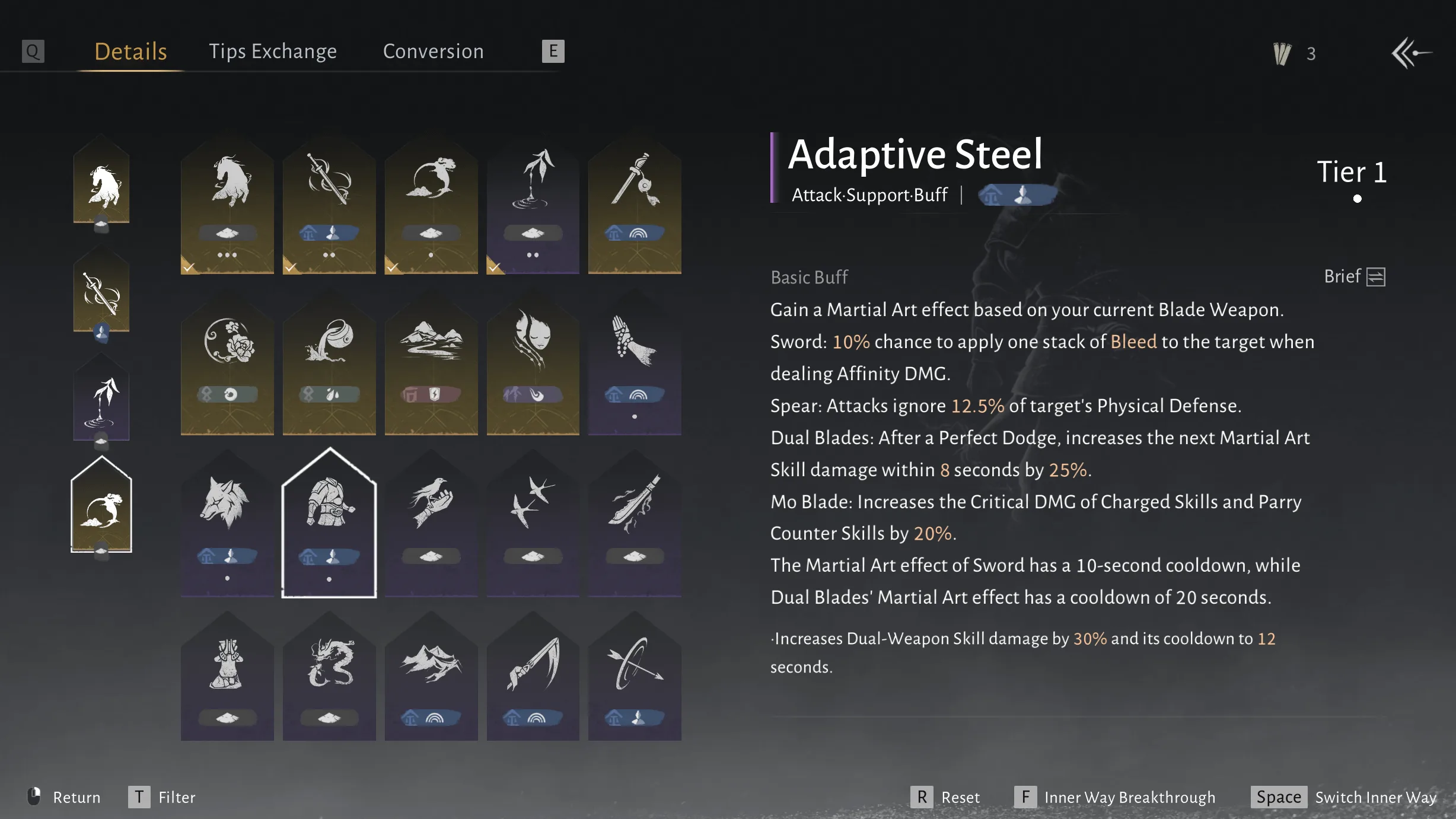
New players often make one of two mistakes: they refuse to upgrade anything because it might be replaced, or they upgrade every new system at once. Spend on durable progress for one chosen Path while treating early gear stats as temporary.
- Your chosen Weapon Path. Keep its core improvements in step with your progress.
- Compatible Inner Ways. Avoid feeding materials into unrelated options simply because they are available.
- Martial Arts and Mystic Arts you use. Improve the tools that support your regular combat loop.
- Persistent enhancements and exploration rewards. Build a foundation through normal play.
- Fine gear tuning. Leave detailed optimisation until replacements arrive less often and you know which stats suit your Path.
Patches can change menus and priorities, but the principle stays useful. Keep Inner Ways and Path improvements ahead of extensive tuning, and do not assume character level alone will make a build stronger.
Do not write off every spare item blindly or assume an older gear guide is still current. Learn what your chosen Path needs before you invest heavily in precise tuning.
Explore With a Purpose
The main story is the cleanest spine for a new account because it introduces features in a manageable order. Follow it until you understand what has opened, then let exploration happen naturally around it.
Worth doing early
- Main-story objectives
- Nearby exploration, puzzles, and side encounters
- Oddities you encounter
- Weapon and Path testing
Safe to postpone
- A best-in-slot gear hunt
- Optimising every stat line
- A second Path alongside your first
- PvP rankings and raid rotations
- Weekly-resource optimisation that makes a new game feel like a job
If you are having fun exploring instead of rushing a daily routine, you are playing in a way the game supports.

Five Beginner Mistakes to Avoid
1. Looking for a permanent best weapon
Balance and available Paths change. Choose a style you want to practise rather than one that looks strongest in a patch-specific ranking.
2. Treating your sect like a locked class
Do not let the fear of a wrong sect stop you from trying the game. Weapons are not restricted to a matching sect.
3. Upgrading several Paths at the same rate
You can experiment with many weapons, but you should not fund every experiment equally. Pick one Path to develop first.
4. Turning temporary gear into a long project
Use stronger gear when it helps you clear content, but do not treat every early item as a final piece.
5. Ignoring combat and exploration systems while chasing levels
Character level alone does not explain why a build struggles. Learn the defensive tools, improve the systems attached to your Path, and pick up important exploration rewards as you travel.
What to Do After the First 10 Hours
By this point, you should have a preferred playstyle, a clear idea of which upgrades support it, and enough familiarity with the world to choose your next activity. Keep progressing the Path you enjoy and revisit other weapons in practice when curiosity strikes.
When you are ready for more specialised content, look for a guide that matches your current patch, your chosen Path, and the mode you actually play. A solo exploration build, a co-op support build, and a PvP build are not interchangeable.
Your first ten hours are for learning the Jianghu at your own pace. Find a combat style you enjoy, develop it with care, and let the rest of the game open up naturally.